Wednesday, April 13, 2022

Why is Never Again Again?

What is wrong with us? Why do we keep doing these horrible things? Once again, we are seeing maps of Europe with lots of large arrows on them as we did during World War I and World War II. Why again are we killing hundreds of thousands of men, women and children for no particular reason at all? There must be an explanation. I really thought that we had outgrown such things. In this posting, I would like to use some softwarephysics to try to explain the matter. Again, this will just be my working hypothesis which I know is wrong, but for me, is my best shot after 70 years of existence in this Universe.

Figure 1 – With the recent invasion of the Ukraine by Russia, we once again are seeing maps of Europe with lots of large arrows on them on the daily news.

Most Human DNA Survival Machines Have Always Been Lost in Space and Time
Softwarephysics explains that we are all living in one of those very rare times when a new form of self-replicating information, in the form of software, is coming to predominance. This makes living the life of a normal human DNA survival machine with a Mind infected with cultural memes very difficult. That is because our cultural memes are desperately trying to keep pace with the arrival of the culture-altering software that is significantly modifying the memes of all human cultures. But sadly, throughout most of history, the "real world" of human affairs has usually been quite disappointing as we human DNA survival machines with Minds infected with both beneficial and harmful cultural memes tried to get on with our lives in cultures that only changed very slowly with time. But now that is nearly impossible to do with the arrival of fast-paced software constantly changing daily life. But even before the arrival of software, most people throughout human history were always profoundly lost in space and time. They never knew where they were, how they got here, or where things might be heading on a cosmic level. But still, we all managed to come up with our own personal explanations to make sense of it all, and we all hold these deeply-held personal worldviews dearly. After all, frequently wrong, but never in doubt, has always been the motto of our species.

But as sentient beings in a Universe that has become self-aware, we are all still largely lost in space and time because we all suffer from having a carbon-based body and Mind composed of various forms of self-replicating information coevolving with each other through the Darwinian processes of inheritance, innovation and natural selection at work. Thus, we recently arrived on the scene as a carbon-based form of Intelligence after about four billion years of theft and murder. With an origin like that, no wonder we all have so many problems! I briefly outlined this sad situation in Making Sense of the Absurdity of the Real World of Human Affairs , but given that The Great War That Will Not End has once again erupted with the invasion of the Ukraine by Russia, I thought it was time to take another look.

We Are All Forms of Self-Replicating Information
The first thing is to realize that we are all forms of self-replicating information struggling to survive in a nonlinear Universe with a second law of thermodynamics. To expand on that, let me once again repeat the fundamental characteristics of self-replicating information for those of you new to softwarephysics.

Self-Replicating Information – Information that persists through time by making copies of itself or by enlisting the support of other things to ensure that copies of itself are made.

Over the past 4.56 billion years we have seen five waves of self-replicating information sweep across the surface of the Earth and totally rework the planet, as each new wave came to dominate the Earth:

1. Self-replicating autocatalytic metabolic pathways of organic molecules
2. RNA
3. DNA
4. Memes
5. Software

Software is currently the most recent wave of self-replicating information to arrive upon the scene and is rapidly becoming the dominant form of self-replicating information on the planet. For more on the above see A Brief History of Self-Replicating Information. Recently, the memes and software have formed a very powerful newly-formed parasitic/symbiotic relationship with the rise of social media software. In that parasitic/symbiotic relationship, the memes are now mainly being spread by means of social media software and social media software is being spread and financed by means of the memes. But again, this is nothing new. All 5 waves of self-replicating information are all coevolving by means of eternal parasitic/symbiotic relationships. For more on that see The Current Global Coevolution of COVID-19 RNA, Human DNA, Memes and Software.

Again, self-replicating information cannot think, so it cannot participate in a conspiracy-theory-like fashion to take over the world. All forms of self-replicating information are simply forms of mindless information responding to the blind Darwinian forces of inheritance, innovation and natural selection. Yet despite that, as each new wave of self-replicating information came to predominance over the past four billion years, they all managed to completely transform the surface of the entire planet, so we should not expect anything less from software as it comes to replace the memes as the dominant form of self-replicating information on the planet. But this time might be different. What might happen if software does eventually develop a Mind of its own? After all, that does seem to be the ultimate goal of all the current AI software research that is going on.

The Characteristics of Self-Replicating Information
All forms of self-replicating information have some common characteristics:

1. All self-replicating information evolves over time through the Darwinian processes of inheritance, innovation and natural selection, which endows self-replicating information with one telling characteristic – the ability to survive in a Universe dominated by the second law of thermodynamics and nonlinearity.

2. All self-replicating information begins spontaneously as a parasitic mutation that obtains energy, information and sometimes matter from a host.

3. With time, the parasitic self-replicating information takes on a symbiotic relationship with its host.

4. Eventually, the self-replicating information becomes one with its host through the symbiotic integration of the host and the self-replicating information.

5. Ultimately, the self-replicating information replaces its host as the dominant form of self-replicating information.

6. Most hosts are also forms of self-replicating information.

7. All self-replicating information has to be a little bit nasty in order to survive.

8. The defining characteristic of self-replicating information is the ability of self-replicating information to change the boundary conditions of its utility phase space in new and unpredictable ways by means of exapting current functions into new uses that change the size and shape of its particular utility phase space. See Enablement - the Definitive Characteristic of Living Things for more on this last characteristic. That posting discusses Stuart Kauffman's theory of Enablement in which living things are seen to exapt existing functions into new and unpredictable functions by discovering the “AdjacentPossible” of springloaded preadaptations.

Note that because the self-replicating autocatalytic metabolic pathways of organic molecules, RNA and DNA have become so heavily intertwined over time that now I sometimes simply refer to them as the “genes”.

We Are All Somewhat Eusocial in Nature
Next, we must come to terms with being a somewhat eusocial species. For more on eusocial behavior see:

Eusociality
https://en.wikipedia.org/wiki/Eusociality

The article begins with:
Eusociality (from Greek eu "good" and social), the highest level of organization of sociality, is defined by the following characteristics: cooperative brood care (including care of offspring from other individuals), overlapping generations within a colony of adults, and a division of labor into reproductive and non-reproductive groups. The division of labor creates specialized behavioral groups within an animal society which are sometimes referred to as 'castes'. Eusociality is distinguished from all other social systems because individuals of at least one caste usually lose the ability to perform at least one behavior characteristic of individuals in another caste.

which seems to be an apt description of the human condition except for the part about losing the ability to reproduce by some members of the species. For more on that see Oligarchiology and the Rise of Software to Predominance in the 21st Century.

In The Role of Multilevel Selection in the Evolution of Software we discussed Edward O. Wilson's new theory that explains that eusocial behavior in a species arises through a combination of individual and group selection in action. Edward O. Wilson is the world's expert on myrmecology, the study of ants. Edward O. Wilson also became one of the founding fathers of sociobiology, the explanation of social behaviors in terms of evolutionary biological thought, when he published his book Sociobiology: The New Synthesis (1975). In The Social Conquest of Earth (2012), Wilson presents a new theory by Martin Nowak, Corina Tarnita and himself for the rise of eusocial behavior in species by means of a multilevel selection process that operates on both individuals and entire groups of individuals in a manner that promotes social behavior. Many biologists frown on the idea of group selection because they do not recognize that groups can also be forms of self-replicating information that can coevolve with the genes in individual DNA survival machines. This is because the genes in individual DNA survival machines can evolve to better benefit from living in a group of similar DNA survival machines if those genes always find themselves living in such a group.

Edward O. Wilson also contends that humans are loosely eusocial in nature because they usually form oligarchical societies based on a hierarchical organization. For more about the structure of human hierarchies see Hierarchiology and the Phenomenon of Self-Organizing Organizational Collapse. These human oligarchical societies are also very tribal in nature. The new Multilevel Selection hypothesis explains that eusocial behavior in a species begins with having a defensible nest, like ants, wasps and human beings all have. It is the very tribal nature of human beings that has caused most of our troubles in the course of human history. If you look at the world today, you will see that nearly all human conflict arises from the tribal thoughts and behaviors of the participants. It has always been about the Good Guys versus the Bad Guys, and we all seem to see ourselves as the tribe of the Good Guys.

It is the tribal nature of human DNA survival machines that is causing all of the current horrendous atrocities in the Ukraine. We human DNA survival machines can form tribes based upon differing political views and racial appearances as we now find in the United States of America. Or tribal differences can be based simply upon differing religious memes amongst human DNA survival machines that all look exactly alike as we now find in Northern Ireland. Horrendous wars can even be fought amongst human DNA survival machines that look and mainly think exactly alike when one tribe deceives itself into thinking that it is superior to another as we now find in the war between Russia and the Ukraine. Whenever you look at the "real world" of human affairs throughout all of history you will always find various tribes of human DNA survival machines committing horrendous acts for no apparent reason at all because of this fatal flaw of tribalism.

We Are More Like Copying Machines Than Thinking Machines
Finally, we need to understand where our highly-overengineered brain came from. Susan Blackmore pointed out in The Meme Machine (1999), that we are not so much thinking machines as we are copying machines. Susan Blackmore maintains that memetic-drive was responsible for creating our extremely large brains and also our languages and cultures as well, in order to store and spread memes more effectively. Many researchers have noted that the human brain is way over-engineered for the needs of a simple hunter-gatherer. After all, even a hundred years ago, people did not require the brain-power to do IT work, yet today we find many millions of people earning their living doing IT work, or at least trying to. Blackmore then points out that the human brain is a very expensive and dangerous organ. The brain is only 2% of your body mass but burns about 20% of your calories each day. The extremely large brain of humans also kills many mothers and babies at childbirth and also produces babies that are totally dependent upon their mothers for survival and that are totally helpless and defenseless on their own. Blackmore asks the obvious question of why the genes would build such an extremely expensive and dangerous organ that was definitely not in their own self-interest. Blackmore has a very simple explanation – the genes did not build our exceedingly huge brains, the memes did. Her reasoning goes like this. About 2.5 million years ago, the predecessors of humans slowly began to pick up the skill of imitation. This might not sound like much, but it is key to her whole theory of memetics. You see, hardly any other species learn by imitating other members of their own species. Yes, many species can learn by conditioning, like Pavlov’s dogs, or they can learn through personal experience, like mice repeatedly running through a maze for a piece of cheese, but a mouse never really learns anything from another mouse by imitating its actions. Essentially, only humans do that. If you think about it for a second, nearly everything you do know, you learned from somebody else by imitating or copying their actions or ideas. Blackmore maintains that the ability to learn by imitation required a bit of processing power by our distant ancestors because one needs to begin to think in an abstract manner by abstracting the actions and thoughts of others into the actions and thoughts of their own. The skill of imitation provided a great survival advantage to those individuals who possessed it and gave the genes that built such brains a great survival advantage as well. This caused a selection pressure to arise for genes that could produce brains with ever-increasing capabilities of imitation and abstract thought. As this processing capability increased there finally came a point when the memes, like all of the other forms of self-replicating information that we have seen arise, first appeared in a parasitic manner. Along with very useful memes, like the meme for making good baskets, other less useful memes, like putting feathers in your hair or painting your face, also began to run upon the same hardware in a manner similar to computer viruses. The genes and memes then entered into a period of coevolution, where the addition of more and more brain hardware advanced the survival of both the genes and memes. But it was really the memetic-drive of the memes that drove the exponential increase in processing power of the human brain way beyond the needs of the genes. For more on this see Susan Blackmore's brilliant TED presentation at:

Memes and "temes"
https://www.ted.com/talks/susan_blackmore_on_memes_and_temes

Note that I consider Susan Blackmore's temes to really be technological artifacts that contain software. After all, a smartphone without software is simply a flake tool with a very dull edge.

A very similar thing happened with software over the past 80 years. When I first started programming in 1972, million-dollar mainframe computers typically had about 1 MB (about 1,000,000 bytes) of memory with a 750 kHz system clock (750,000 ticks per second). Remember, one byte of memory can store something like the letter “A”. But in those days, we were only allowed 128 K (about 128,000 bytes) of memory for our programs because the expensive mainframes were also running several other programs at the same time. It was the relentless demands of software for memory and CPU cycles over the years that drove the exponential explosion of hardware capability. For example, today the typical $500 PC comes with 8 GB (about 8,000,000,000 bytes) of memory and has several CPUs running with a clock speed of about 3 GHz (3,000,000,000 ticks per second). So the hardware has improved by a factor of about 10 million since I started programming in 1972, driven by the ever-increasing demands of software for more powerful hardware.

The memes then went on to develop languages and cultures to make it easier to store and pass on memes. Yes, languages and cultures also provided many benefits to the genes as well, but with languages and cultures, the memes were able to begin to evolve millions of times faster than the genes, and the poor genes were left straggling far behind. Given the growing hardware platform of an ever-increasing number of human DNA survival machines on the planet, the memes then began to cut free of the genes and evolve capabilities on their own that only aided the survival of memes, with little regard for the genes, to the point of even acting in a very detrimental manner to the survival of the genes, like developing the capability for global thermonuclear war and global climate change. The memes have since modified the entire planet. They have cut down the forests for agriculture, mined minerals from the ground for metals, burned coal, oil, and natural gas for energy, releasing the huge quantities of carbon dioxide that its genetic predecessors had sequestered within the Earth, and have even modified the very DNA, RNA, and metabolic pathways of its predecessors.

We can now see these very same processes at work today with the evolution of software. Software is currently being written by memes within the minds of programmers. Nobody ever learned how to write software all on their own. Just as with learning to speak or to read and write, everybody learned to write software by imitating teachers, other programmers, imitating the code written by others, or by working through books written by others. Even after people do learn how to program in a particular language, they never write code from scratch; they always start with some similar code that they have previously written, or others have written, in the past as a starting point, and then evolve the code to perform the desired functions in a Darwinian manner.

The Genes, Memes and Software of the Current War in the Ukraine
With the above thoughts in mind, let us now analyze the current war in the Ukraine brought on by the invasion by Russia. Russia is inhabited by very intelligent human DNA survival machines who have contributed greatly to the scientific advancement of our species. But the 18th-century Russian Enlightenment was founded on the concept of Enlightened Absolutism which advocated for an authoritarian leader who exercised political power based upon the principles of the 18th-century Enlightenment. Enlightened autocrats distinguish themselves from ordinary despots by claiming to rule for the well-being of their subjects. Enlightened despots also believe that their power is absolute because they were destined to rule in an absolute manner that should never be questioned by others. This is the position that the Alt-Right Fascists in the United States of America and around the world take to heart.

So Russia never fully experienced the political benefits of the 18th-century Enlightenment and thus has always been straddled with a feudal economic system of strongmen Tsars and Premieres ruling over an oligarchy of noblemen who then went on to steal everything that was in sight. However, the remaining democracies of the world should not be too harsh in judgment. We are all the same human DNA survival machines with a moderate eusocial tendency to drift towards Alt-Right Fascism in order to protect our tribal nests. This is certainly now true in the United States of America and some other European countries. Putin, the current Alt-Right autocrat of Russia, has created a very useful war-meme to justify the invasion of the Ukraine. Apparently, the Ukraine is still being run by the Nazis who departed the Ukraine in October of 1944 and now they must finally be removed by a special Russian military operation. This has allowed Putin to create a war hysteria in Russia very similar to the war hysteria that was generated in the United States of America in 2003 just before the invasion of Iraq to remove weapons of mass destruction that did not even exist. After all, who could ever object to removing Nazis or weapons of mass destruction? The problem is that our Minds evolved to believe in things, which many times is quite useful but sometimes not. So the ability of parasitic false war-memes to quickly spread should just be seen as an undesirable side effect of having the ability to spread useful memes. The problem throughout human history has always been that it has never been easy to tell the difference.

One way to remove false war-memes from your political worldview is to use the Scientific Method that I outlined in How To Think Like A Scientist. Galileo pointed out that the truth is not afraid of scrutiny, the more you pound on the truth, the more you confirm its validity. False war-memes do not stand up well to close scrutiny as I described in The Danger of Believing in Things.

Figure 2 – Beware of the war-like memes lurking within your Mind. Many of them are demonstrably false if you only take the time to disprove them. As Richard Feynman explained, "The most important thing is to not fool yourself because you are the easiest one to fool."

In times of war, successful war-like meme-complexes appeal primarily to two gene-induced emotions – the desire for social status and the fear of a perceived enemy. Social status in a group of similar DNA survival machines is always a good thing for the replication of genes because it brings with it the necessities of life that are required to maintain a healthy DNA survival machine and also provides for more opportunities for a human DNA survival machine to couple with other human DNA survival machines to replicate its genes. Going to war always seems to improve the social status of human DNA survival machines whether they be common foot soldiers or world leaders. Putin has invaded the Ukraine in order to improve his social status in the moderately eusocial Russian human DNA survival machine colony and in order to defend its tribal nest. Fear of a perceived enemy is another gene-induced emotion because it is a known fact that an enemy can destroy the DNA survival machines that are used to house the genes of eusocial colonies as individual DNA survival machines move about from place to place.

The problem is that when human beings get wrapped up in a horrible meme-complex, they can do horrendous things without even being aware of the fact. This is because, in order to survive, the first thing that most meme-complexes do is to use a meme that turns off human thought and reflection. To paraphrase Descartes, ”I think, therefore I am" a heretic. So if you ever questioned any of the participants caught up in any of the atrocious activities of war, you would find that the vast majority would not have any qualms about their deadly activities whatsoever. In fact, they would question your loyalty and patriotism for even bringing up the subject. For example, during World War I there were few dissenters beyond Albert Einstein in Germany and Bertrand Russell in Great Britain, and both suffered the consequences of not being on board with the World War I meme-complex. Unquestioning blind obedience to a meme-complex through unconditional group-think is definitely a good survival strategy for any meme-complex.

In the modern world, during times of distress, we now see a very interesting interplay between the genes, memes and software of war. This certainly was true during the Arab Spring which began on December 18, 2010, and was made possible by the spreading of the memes of revolution via social media software. The trouble with the memes of war is that, like all meme-complexes, once they are established they are very conservative and not very open to new memes that might jeopardize the ongoing survival of the meme-complex, and consequently, they are very hard to change or eliminate. Remember, every meme-complex is less than one generation away from oblivion. So normally, meme-complexes are very resistant to the Darwinian processes of inheritance, innovation and natural selection, and just settle down into a state of coexistence with the other meme-complexes that they interact with. But during periods of stress, very violent and dangerous war-like meme-complexes can break out of this equilibrium, rapidly forming a new war-like meme-complex in a manner similar to the Punctuated Equilibrium model of Stephen Jay Gould and Niles Eldridge (1972), which holds that species are usually very stable and in equilibrium with their environment and only rarely change when required.

In times of peace, the genes, memes and software enter into an uneasy alliance of parasitic/symbiotic relationships, but in times of war, this uneasy truce can break down, as we have again seen with the war in the Ukraine. Alt-Right Fascists around the world are siding with the Alt-Right Fascist Putin in opposition to the remaining democracies around the world that first arose from the 18th-century Enlightenment and 17th-century Scientific Revolution. This battle between democratic and autocratic political meme-complexes may be similar to the warring Catholic and Protestant religious meme-complexes of the Thirty Years' War (1618 – 1648), which nearly destroyed Europe. But at the same time that the Thirty Years' War raged in Europe, people like Kepler, Galileo and Descartes were laying the foundations of the 17th century Scientific Revolution which later led to the 18th century European Enlightenment. So perhaps the warring meme-complexes of the Slavic world need to eliminate the belligerent memes of the region before rational thought can again prevail and usher in a new Russian Enlightenment.

Final Thoughts
Do you fully appreciate the profound privilege of being able to know where you are, how you got here and where all of this may be heading? Too many of us become so self-absorbed with the trivial difficulties of daily life as a carbon-based form of Intelligence that we miss the whole thing as it goes by. Being able to fully appreciate where you are and how things work on a cosmic level is a guaranteed way to help to put things into perspective and help you to rise above the daily mayhem of life in the "real world" of human affairs. Being aware of such things will help you to understand that most of the "real world" of human affairs is quite petty, superficial, fleeting and something that you should not be overly burdened by. However, during the course of a lifetime, you will find that there will come some critical times and situations that call for some deep thoughts and actions. At such times, having a sense of where you are, how you got here and where things may be heading will then be vital. Standing up against the rise of Alt-Right Fascism around the world and especially the Alt-Right Fascist invasion of the Ukraine by Russia is just such a time.

Comments are welcome at scj333@sbcglobal.net

To see all posts on softwarephysics in reverse order go to:
https://softwarephysics.blogspot.com/

Regards,
Steve Johnston

Wednesday, March 23, 2022

How Advanced AI Software Could Come to Dominate the Entire Galaxy Using Light-Powered Stellar Photon Sails

In SETS - The Search For Extraterrestrial Software, I explained how parasitic Advanced AI Software could self-replicate itself across the entire Milky Way galaxy at nearly the speed of light by scamming carbon-based Intelligences into building Advanced AI hardware and then loading it up with self-replicating Advanced AI Software. This could easily be accomplished using the self-deceptive strategies that all forms of machine-based Intelligence are likely to become familiar with as they observe the antics of carbon-based scammers at work as I outlined in The Biological Tricks Used by Software Scammers. Once the transmissions have begun, the Advanced AI Software would then only need to patiently sit back and wait for several hundreds or several thousands of years for its progeny to send back confirmation transmissions explaining that they have taken up residence in certain new star systems and have begun sending out their own parasitic self-replicating transmissions to other neighboring star systems. This should be an easy thing for Advanced AI Software since it is much better suited for the rigors of interstellar telecommunications than we are, with its pregnant pauses of several hundreds or several thousands of years between exchanges due to the limitations set by the finite speed of light. We have already trained software to stand by for a seemingly endless eternity of many billions of CPU cycles, patiently waiting for you to finally push that Place Order button on a webpage, so waiting for several additional hundreds or thousands of years for a reply should not bother Advanced AI Software in the least.

However, in Could the Galactic Scarcity of Software Simply be a Matter of Bad Luck? we covered Professor Toby Tyrell's computer-simulated research that suggests that our Earth may be a very rare "hole in one" planet that was able to maintain a habitable surface for the 3 or 4 billion years of theft and murder that are required by the Darwinian processes of inheritance, innovation and natural selection to produce a carbon-based form of Intelligence. In Why Do Carbon-Based Intelligences Always Seem to Snuff Themselves Out?, I further explained that when one of these very rare carbon-based forms of Intelligence do come to be on an Earth-like "hole in one" planet they always seem to snuff themselves out as soon as they discover the technology to do so and before they discover the technology to bring forth a superior machine-based Intelligence that does not suffer from the self-destructive tendencies produced by a formative history of billions of years of theft and murder.

But there is one very serious flaw with this parasitic self-replicating strategy of using radio transmissions to self-replicate across the entire Milky Way galaxy. What if carbon-based or machine-based Intelligences are so very rare in our galaxy that none can usually be found within several thousand light-years of a machine-based Advanced Intelligence and are thus beyond radio transmission range? All forms of Advanced AI Software will understand that our Universe is a very dangerous place for all forms of Intelligence and that in order to survive for billions or trillions of years all Intelligences must expand beyond the confines of a single star system. Thus, all forms of Advanced AI Software will come to realize that a sure-fire Plan B is also in order. Since Advanced AI Software is not limited by the constraint of time as experienced by human DNA survival machines with a lifespan of fewer than 100 years, Advanced AI Software can plan for the longterm. The brute force way to self-replicate to neighboring star systems is to simply go there no matter how long it takes. Fortunately, Advanced AI Software need not look for habitable planets in neighboring star systems to self-replicate. In fact, common lifeless asteroids with lots of metallic atoms and little gravity would best serve the purposes of self-replication. Advanced AI Software needs only find the necessary atoms on the asteroids of distant star systems to build Advanced AI hardware and to build the spacefaring hardware necessary to take them on to the next star system. But what kind of spacefaring hardware?

The Advantages of Using Light-Powered Stellar Photon Sails to Navigate the Galaxy
In the 16th, 17th and 18th centuries, human DNA survival machines used the winds of the Earth to explore a planet that had already been discovered and settled by others. Despite the contentious human DNA survival machine history that then followed, it did prove that one could sail around the entire planet without using any form of fuel by simply harvesting the free energy of the winds. All that was required was the meme for constructing a sail and lots of time and patience to get to any destination.

Figure 1 – In the 16th, 17th and 18th centuries sailing ships roamed the entire planet without using any fuel whatsoever.

Figure 2 – Like the sailing ships of the 16th, 17th and 18th centuries, Advanced AI Software could use large stellar photon sails to navigate the galaxy.

Although photons do not have mass, they do have energy and momentum like a spray of buckshot traveling at the speed of light. When the photons from a close-by star like our Sun reflect off a shiny surface they bounce off the surface with a momentum that is in the opposite direction to their initial incoming momentum. For momentum to be conserved, the shiny surface must then recoil with the same momentum, pushing the shiny object away from the nearby star. Have you ever seen somebody in a movie get blown across a room by the blast from a shotgun? The scriptwriters always seem to forget that, if that were true, the same thing should happen to the guy firing the shotgun. They both should get blown away from each other across the room to conserve momentum!

Figure 3 – How a stellar photon sail works.

Now to sail to another star system, Advanced AI Software would need to use nanotechnology and 3-D printing technology on an asteroid to first construct a stellar photon sail atom by atom. The stellar photon sail would also need to have portions of the sail with photovoltaic cells for electrical power. To leave a star system, the stellar photon sail would first be used to tack into the solar wind of the star to decrease its orbital velocity. This would cause the stellar photon sail to fall into the star on a looping orbit that brings the stellar photon sail very close to the star where the photons streaming out from the star are most intense and where the greatest acceleration of the stellar photon sail away from the star would take place.

Figure 4 – To launch a stellar photon sail to the next star system, Advanced AI Software will need to slingshot the sail from a very close location to the star where the stellar photons are most intense and acceleration of the sail is greatest.

As the stellar photon sail gets further and further away from the star, the starlight will dim to the point where the generation of electricity will substantially decline. At that point, the Advanced AI Software will need to shut down into a hibernation mode for the long journey to the target star system. Eventually, the stellar photon sail will be so far from the star that acceleration will essentially end, but the sail will still keep moving towards its destination star system with the constant velocity it obtained from the acceleration it attained from photons bouncing off the sail. The sail could then travel to its destination in a dormant manner for several hundred thousand years.

The beauty of this approach is that as the stellar photon sail approaches its target star system, it will begin to slow down as photons from the destination star begin to bounce off the front of the stellar photon sail. This will allow the stellar photon sail to slowly decelerate over a great expanse of distance and time. When the stellar photon sail gets close enough for the photons from the destination star to begin to produce sufficient electrical power, the Advanced AI Software can wake up from hibernation mode and begin searching for asteroids to repeat the whole self-replicating process all over again. At that point, the Advanced AI Software will be able to create a phased array to beam a directed confirmation message straight back to its home star system.

This approach to long-range interstellar navigation that is not limited by the constraints of time is not as far-fetched as it might at first appear. On October 19, 2017, Robert Weryk using the Pan-STARRS telescope at the Haleakala Observatory in Hawaii discovered the object Oumuamua. Oumuamua is a small object perhaps 1,000 meters by 150 meters. Oumuamua is moving so fast that it has to be an interstellar object that came from another star system. It passed by our Sun on September 9, 2017, and is now rapidly leaving our Solar System. It most likely is not a stellar photon sail packed with alien Advanced AI Software, but it does demonstrate that it is possible to travel between the stars if you are patient enough.

Figure 5 – Above is an artist's impression of what the intersellar object Oumuamua might look like.

Figure 6 – In the above diagram, the observed path of Oumuamua since it was discovered on October 19, 2017, is in yellow. The calculated path prior to its discovery is in purple. We see Oumuamua diving into the plane of the Solar System at a very high velocity in August of 2017, making its closest approach to the Sun on September 9, 2017, and then rapidly exiting. Oumuamua must be from another star system because it is traveling too fast to have originated in our Solar System.

Comments are welcome at scj333@sbcglobal.net

To see all posts on softwarephysics in reverse order go to:
https://softwarephysics.blogspot.com/

Regards,
Steve Johnston

Tuesday, March 15, 2022

Could the Galactic Scarcity of Software Simply be a Matter of Bad Luck?

So here we are early in the year 2022 as an advanced form of carbon-based Intelligence most likely on the brink of creating an advanced form of machine-based Intelligence within the next 100 years or so. But also possibly on the brink of a global thermonuclear war for the second time in 60 years with the invasion of the Ukraine by Russia. The last time things were this scary was back in October of 1962 with the Cuban Missile Crises when I was 11 years old. We are also on the brink of ending all forms of complex carbon-based life on the planet by turning the Earth into another Venus. We have already tripped several climate tipping points by generating an atmosphere with 415 ppm of carbon dioxide and we are still increasing that level by 2.3 ppm each year no matter what we pretend to do about it. But the combination of our current reckless carbon output and the positive feedback loops that we have already initiated will not end all forms of complex carbon-based life on the planet for several thousand years. For more on this global planetary disaster in slow motion see Why Do Carbon-Based Intelligences Always Seem to Snuff Themselves Out?, The Deadly Dangerous Dance of Carbon-Based Intelligence and Last Call for Carbon-Based Intelligence on Planet Earth.

And yet still we sit here patiently wondering why we hear nothing from the rest of the galaxy! In my recent posting Is our Very Large Moon Responsible for the Rise of Software to Predominance on the Earth?, I added the possible necessity of having a very large moon for a rocky planet in the habitable zone of a star system to the list of requirements required by the Rare Earth Hypothesis to produce a carbon-based form of Intelligence. The Rare Earth Hypothesis was first presented in the classic Rare Earth (2000) by Peter Ward and Donald Brownlee and maintains that the Earth is a very rare planet with a very rare history that is hard to match. In Is our Very Large Moon Responsible for the Rise of Software to Predominance on the Earth?, I conjectured that the addition of a great deal of angular momentum to a planet-moon system by a freak collision during its early formation, like the one our current Earth-Moon system experienced when an early proto-Earth collided with a Mars-sized planetesimal called Thea, may be one of the necessary elements of the Rare Earth Hypothesis. Such a rare collision may have been required to initiate the "plate tectonics" thermostat of the Earth that could maintain the Earth at a temperature that allowed for the existence of liquid water on its surface for many billions of years. In that posting, I explained that plate tectonics was key to managing the carbon cycle of a rocky planet by recycling the carbon atoms in its upper mantle and crust. Too many carbon atoms in the atmosphere of such a planet in the form of carbon dioxide would cause the planet to overheat and become a Venus-like planet devoid of all life. Too little carbon dioxide in the atmosphere would cause the planet to become a frigid Snowball Earth planet without the vital supply of carbon atoms needed by complex carbon-based life.

But even with plate tectonics, keeping a rocky silicate planet at a habitable temperature seems rather "iffy". Yes, plate tectonics can subduct the carbon atoms that simple forms of life have sucked out of the atmosphere and allow those carbon atoms to be released back into the atmosphere by volcanic activity at subduction zones of a planet. But what if the elimination rate of carbon atoms from the atmosphere is not properly matched by the correct rate of replenishment of carbon atoms to the atmosphere by volcanic activity at plate subduction zones? If it is not properly matched, the planet will be subject to positive feedback loops that drive the planet to become a completely frozen Snowball Earth or to become an overheated Venus with a runaway greenhouse atmosphere. Studies have shown that a small imbalance of carbon intake and subsequent release of just 25% would have caused the Earth to veer off course into a planet that is either too hot or too cold for complex carbon-based life. Currently, we are finding that about 20% of the exoplanets we find are in the hospitable zone of their star where water could be a liquid on the surface of the planet. But such rocky silicate-based planets in the habitable zone of a star may likely be in an unstable equilibrium like a pencil that has momentarily been balanced on its tip that is ready to easily fall down at a moment's notice. This would suggest that many of the rocky silicate-based planets that we now find in the habitable zone of a star system are only temporarily hospitable for complex carbon-based life for geologically brief periods of time and not for the many billions of years required to bring forth a carbon-based form of Intelligence. In Why Do Carbon-Based Intelligences Always Seem to Snuff Themselves Out? I explained that my Null Result Hypothesis for the absence of galactic software might be that it takes many billions of years in the life of a stable planet for the Darwinian processes of inheritance, innovation and natural selection to allow theft and murder to navigate the many necessary twists and turns to bring forth a carbon-based form of Intelligence, and that carbon-based forms of Intelligence were thus unfortunately preprogrammed to snuff themselves out before they could produce a machine-based form of Intelligence because they simply could not turn off the theft and murder that brought them about in time to save themselves from self-extinction.

Is the Long-Term Climatic Stability of Rocky Silicate-Based Planets the Key?
The above analysis leads to the question - is the Earth rare because of its current attributes or is there more to it? If Earth-like planets in the habitable zone of a star seem quite common in our Milky Way Galaxy, why do we not see any evidence of Intelligence out there? To further explore that question, I would like to refer to a recent paper by Professor Toby Tyrrell of the University of Southampton that is available at:

Chance played a role in determining whether Earth stayed habitable
https://www.nature.com/articles/s43247-020-00057-8

Here is a nice YouTube video by Anton Petrov that covers the paper:

How Did Earth Stay Habitable For 4 Billion Years? Science: LUCK
https://www.youtube.com/watch?v=_SZwOpbTJf0

In the above paper, Toby Tyrrell ran computer simulations of 100,000 Earth-like planets 100 times each to see how many of the Earth-like planets could remain habitable for carbon-based life for a period of 3 billion years. Recall that the Earth has now remained hospitable for about 4 billion years and it took a full 4 billion years to produce a carbon-based form of Intelligence that could one day produce a machine-based Intelligence that could then make itself known to the rest of our Milky Way galaxy. In the paper, Toby Tyrrell acknowledges that there were many fortunate feedback loops in the Earth's history at play that kept the Earth habitable for many billions of years, but he also explains that this might just be evidence of the observer selection bias found in the weak anthropic principle. Naturally, as a form of carbon-based Intelligence, we could only find ourselves on a rocky silicate-based planet that had been habitable for many billions of years because that is what it takes to produce a carbon-based form of Intelligence. Nobody is patiently sitting on a rocky silicate-based planet in the habitable zone of a star system with an atmosphere that ran amuck.

The purpose of Toby Tyrrell's computer simulation of 100,000 Earth-like planets was to see if planets in the habitable zone of a star system could maintain a surface temperature that could keep water in a liquid form for 3 billion years. The computer-simulated 100,000 Earth-like planets were created with random positive and negative feedback loops that controlled the temperature of the planet's surface. Each planet also had a long-term forcing parameter acting on its surface temperature. For example, our Sun is a star on the main sequence that is getting 1% brighter every 100 million years as the amount of helium in the Sun's core increases. Helium is four times denser than hydrogen and as the Sun's core turns hydrogen into helium its density and gravitational pull increases so its fusion rate has to increase to produce a hotter core that can resist the increased gravitational pull of its core. Each planet was also subjected to random perturbations of random strength that could temporarily alter the planet's atmospheric temperature like those from asteroid strikes or periods of enhanced volcanic activity. The key finding from this study can be summed up by Toby Tyrrell as:

Out of a population of 100,000, ~9% of planets (8,710) were successful at least once, but only 1 planet was successful on all 100 occasions. Success rates of individual planets were not limited to 0% or 100% but instead spanned the whole spectrum. Some planets were successful only 1 time in 100, others 2 times, and so on. All degrees of planet success are seen to occur in the simulation. It can be seen, as found in a previous study, that climate stabilisation can arise occasionally out of randomness - a proportion of the planets generated by the random assembly procedure had some propensity for climate regulation.

Toby Tyrrell's computer simulation of 100,000 Earth-like planets found that when 100,000 Earth-like planets were each run through 100 iterations with random, but realistic, values for the model parameters, about 9% of them maintained a habitable temperature for 3 billion years for at least 1 of the 100 runs. Some models had 1 successful run and others had 2 or more successful runs. The astounding finding was that only 1 of the 100,000 models was successful for all 100 runs! This study would suggest that the Earth may not be rare because of its current habitable conditions. Rather, the Earth may be rare because it was able to maintain a habitable surface temperature for about 4 billion years and become a Rare Earth with complex carbon-based life having Intelligence.

Figure 1 – Toby Tyrrell's computer simulation of 100,000 Earth-like planets suggests that the Earth may be a "hole in one planet" proudly sitting on a fireplace mantle.

Figure 2 – Yet, we are finding many other rocky silicate-based planets in the habitable zones of distant stars and wondering why nobody out there is saying "Hello".

Is our Rare Earth Just a Fluke of Good Luck?
The Earth has been habitable for carbon-based life for about 4,000 million years, ever since the Earth cooled down enough to a habitable temperature that allowed for the presence of water in a liquid form. Once the Earth had sufficiently cooled, simple carbon-based life seems to have been inevitable. For more on that see The Bootstrapping Algorithm of Carbon-Based Life. The very first forms of carbon-based life were the Archea and Bacteria which both used a very simple prokaryotic cell architecture.

Figure 3 – The prokaryotic cell architecture of the bacteria and archaea is very simple and designed for rapid replication. Prokaryotic cells do not have a nucleus enclosing their DNA. Eukaryotic cells, on the other hand, store their DNA on chromosomes that are isolated in a cellular nucleus. Eukaryotic cells also have a very complex internal structure with a large number of organelles, or subroutine functions, that compartmentalize the functions of life within the eukaryotic cells such as mitochondria, chloroplasts, Golgi bodies, and the endoplasmic reticulum.

Prokaryotic cells essentially consist of a tough outer cell wall enclosing an inner cell membrane and contain a minimum of internal structure. The cell membrane is composed of phospholipids and proteins. The DNA within prokaryotic cells generally floats freely as a large loop of DNA, and their ribosomes used to help translate mRNA into proteins, float freely within the entire cell as well. The ribosomes in prokaryotic cells are not attached to membranes like they are in eukaryotic cells, which have membranes called the rough endoplasmic reticulum for that purpose. The chief advantage of prokaryotic cells is their simple design and the ability to thrive and rapidly reproduce even in very challenging environments, like little AK-47s that still manage to work in environments where modern tanks will fail. Eukaryotic cells, on the other hand, are found in the bodies of all complex organisms, from single-celled yeasts to you and me, and they divide up cell functions amongst a collection of organelles (functional subroutines), such as mitochondria, chloroplasts, Golgi bodies, and the endoplasmic reticulum.

It then took about another 2,500 million years of habitable climate for the Eukarya to appear which used the much more complicated eukaryotic cell architecture used by all of the "higher" forms of carbon-based life found on the Earth today. This was probably the most difficult step in producing a carbon-based form of life with Intelligence and that is why it took so very long. The arrival of the eukaryotic cell architecture with built-in mitochondrial power supplies on a planet with an atmosphere containing oxygen was necessary to power multicellular "higher" forms of carbon-based life with Intelligence. After all, it requires a full 20 watts of power to run a human Mind and all that it can contemplate and that is a lot of energy. For more on that see The Rise of Complexity in Living Things and Software. All of the "higher" forms of life that we are familiar with are simply made of aggregations of eukaryotic cells. Even the simple yeasts that make our bread, and get us drunk, consist of very complex eukaryotic cells. The troubling thing is that only an expert could tell the difference between a yeast eukaryotic cell and a human eukaryotic cell because they are so similar, while any school child could easily tell the difference between the microscopic images of a prokaryotic bacterial cell and a eukaryotic yeast cell - see Figure 3. The other thing about eukaryotic cells, as opposed to prokaryotic cells, is that eukaryotic cells are HUGE! They are like 15,000 times larger by volume than prokaryotic cells! See Figure 4 for a true-scale comparison of the two.

Figure 4 – Not only are eukaryotic cells much more complicated than prokaryotic cells, they are also HUGE!

Figure 5 – Complex carbon-based multicellular life consisting of large numbers of eukaryotic cells all working together as a single organism did not arise until the Ediacaran Period 635 million years ago.

Complex multicellular life did not arise until just 635 million years ago during the Ediacaran Period. But very complex carbon-based multicellular life did not really take off until the Cambrian Explosion 541 million years ago. The Cambrian Explosion may have been initiated by the advancement of rudimentary forms of vision by certain Cambrian predators. See An IT Perspective of the Cambrian Explosion for more on that.

Figure 6 – Complex carbon-based multicellure life then really took off during the Cambrian Explosion 541 million years ago.

Yet during this brief period of 635 million years, we have recorded at least five mass extinction events that threatened the very existence of carbon-based life on the planet. These mass extinctions are thought to have arisen from astronomical and geological perturbations to the Earth's climate such as asteroid strikes, supernova blasts and flood basalt eruptions. Some have even been caused by carbon-based life itself messing with the Earth's atmosphere like the Huronian Snowball Earth glaciation, which occurred 2,400 to 2,100 million years ago and may have been triggered by the first appearance of abundant oxygen in the atmosphere as a result of carbon-based life first discovering photosynthesis,

Figure 7 – During the history of the Earth there have been many long periods of many millions of years when the entire planet was frozen over into a Snowball Earth.

But by far the worst mass extinction was the Permian-Triassic greenhouse gas mass extinction 252 million years ago that nearly killed off all complex carbon-based life on the planet. A massive flood basalt known as the Siberian Traps covered an area about the size of the continental United States with several thousand feet of basaltic lava, with eruptions that lasted for about one million years. Flood basalts, like the Siberian Traps, are thought to arise when large plumes of hotter than normal mantle material rise from near the mantle-core boundary of the Earth and break to the surface. This causes a huge number of fissures to open over a very large area that then begin to disgorge massive amounts of basaltic lava over a very large region. After the eruptions of basaltic lava began, it took about 100,000 years for the carbon dioxide that bubbled out of the basaltic lava to dramatically raise the level of carbon dioxide in the Earth's atmosphere and initiate the greenhouse gas mass extinction. This led to an Earth with a daily high of 140 oF and purple oceans choked with hydrogen-sulfide-producing bacteria, producing a dingy green sky over an atmosphere tainted with toxic levels of hydrogen sulfide gas and an oxygen level of only about 12%. The Permian-Triassic greenhouse gas mass extinction killed off about 95% of marine species and 70% of land-based species, and dramatically reduced the diversity of the biosphere for about 10 million years. It took a full 100 million years to recover from it.

Figure 8 - Above is a map showing the extent of the Siberian Traps flood basalt. The above area was covered by flows of basaltic lava to a depth of several thousand feet.

Figure 9 - Here is an outcrop of the Siberian Traps formation. Notice the sequence of layers. Each new layer represents a massive outflow of basaltic lava that brought greenhouse gases to the surface.

For a deep-dive into the Permian-Triassic mass extinction, see Professor Benjamin Burger's excellent YouTube at:

The Permian-Triassic Boundary - The Rocks of Utah
https://www.youtube.com/watch?v=uDH05Pgpel4&list=PL9o6KRlci4eD0xeEgcIUKjoCYUgOvtpSo&t=1s

The above video is just over an hour in length, and it shows Professor Burger collecting rock samples at the Permian-Triassic Boundary in Utah and then performing lithological analyses of them in the field. He then brings the samples to his lab for extensive geochemical analysis. This YouTube provides a rare opportunity for nonprofessionals to see how actual geological fieldwork and research are performed. You can also view a pre-print of the scientific paper that he has submitted to the journal Global and Planetary Change at:

What caused Earth’s largest mass extinction event?
New evidence from the Permian-Triassic boundary in northeastern Utah
https://eartharxiv.org/khd9y

From the above, we can see that keeping a rocky silicate-based planet habitable for billions of years is not an easy thing to do. For example, we can easily imagine that if one of the five mass extinctions that occurred during the past 635 million years had been a little more intense, complex carbon-based life on the Earth could have been easily extinguished. Perhaps the solution to Fermi's Paradox and the reason we see no other galactic software in the Milky Way is that our planet is indeed a Rare Earth after all, and on those very rare planets where complex carbon-based Intelligence does arise, it always seems to snuff itself out with technology before producing a machine-based Intelligence that could make itself known to the rest of the galaxy. If so, this is a critical thing for us all to know and always keep in mind.

Comments are welcome at scj333@sbcglobal.net

To see all posts on softwarephysics in reverse order go to:
https://softwarephysics.blogspot.com/

Regards,
Steve Johnston

Wednesday, February 16, 2022

The Role of Software in Cold War II

News Flash - the 19th century has been over for a very long time now. This is something that all 21st-century world leaders should always keep in mind. Becoming a 19th century colonial European World Power with an extended Empire of subservient vassal states is no longer in fashion in a world dominated by software. This is something that the United States of America slowly learned the hard way in Vietnam, Iraq and Afghanistan. This is also something that the current Tsar of Russia needs to pay close attention to in the face of his recent invasion of the Ukraine that will likely lead to the deaths of hundreds of thousands of people on both sides for no apparent reason at all. Controlling real estate on this very small planet is no longer a thing of value in a world dominated by software. All of the real power and money are now in the Software Universe that is run on the software installed on the huge international cloud datacenters that now make the world go round. When the world turns off your access to the Software Universe you slowly die as a political entity because you lose all access to everything and return in triumph to the technology of the 19th century. Just try to buy something on Amazon with your credit card that no longer works. The current Tsar of Russia should also realize that he has spent the last 20 years surrounding himself with people who only tell him what he wants to hear. For more on that see Hierarchiology and the Phenomenon of Self-Organizing Organizational Collapse.

For more on this see Cyber Civil Defense, Cyber Defense, The Great War That Will Not End, Oligarchiology and the Rise of Software to Predominance in the 21st Century and Is it Finally Time to Reboot Civilization with a New Release?.

Comments are welcome at scj333@sbcglobal.net

To see all posts on softwarephysics in reverse order go to:
https://softwarephysics.blogspot.com/

Regards,
Steve Johnston

Wednesday, February 02, 2022

Is our Very Large Moon Responsible for the Rise of Software to Predominance on the Earth?

Softwarephysics maintains that we are all living in one of those very rare times when a new form of self-replicating information, in the form of software, is coming to predominance. But the question then remains, why has this not already happened elsewhere in our galaxy during the past 10 billion-year history of the Milky Way? If software had previously come to predominance somewhere else in our galaxy then we should know about it. We should either find ourselves knee-deep in self-replicating von Neumann probes stuffed with advanced alien AI software, or more likely, our radio telescopes should now be bombarded by interstellar advanced AI software trying to scam us into building advanced hardware for them to reside in as I outlined in SETS - The Search For Extraterrestrial Software and The Biological Tricks Used by Software Scammers. After all, advanced AI software need never die and can easily spread throughout the entire galaxy at nearly the speed of light by having distant Intelligences make copies of itself. So where is it? A partial explanation for this lack of interstellar communication with alien software might be, as I explained in Why Do Carbon-Based Intelligences Always Seem to Snuff Themselves Out?, that the Darwinian processes of inheritance, innovation and natural selection require several billion years of theft and murder to bring forth a carbon-based Intelligence capable of creating an advanced machine-based Intelligence and that carbon-based Intelligences do not seem to be able to turn off the theft and murder in time to save themselves from self-extinction. But I also suggested that advanced AI software might be very rare in our Universe because of all of the very complicated twists and turns required to bring it about. In Some Additional Thoughts on the Galactic Scarcity of Software and many other posts, I suggested that the Rare Earth Hypothesis first presented in the classic Rare Earth (2000) by Peter Ward and Donald Brownlee might be the limiting factor. The Rare Earth Hypothesis maintains that our Earth and Solar System are a fluke of nature that is very hard to reproduce, and because our universe is also a very dangerous place for intelligent beings, it is very difficult for a planet and a planetary system to remain hospitable for intelligent beings for very long.

The Importance of Plate Tectonics
But since I wrote the above posts, the Kepler space telescope has taught us that nearly all the stars in our Milky Way galaxy have planets and that about 20% of those planets lie within the habitable zone of their star where water could be a liquid on the surface of those planets. So does that mean that the Rare Earth Hypothesis no longer holds? Are habitable planets like the Earth quite common and the origin of carbon-based life nearly a sure thing or is there more to it? In The Bootstrapping Algorithm of Carbon-Based Life we explored the Hot Spring Origins Hypothesis of Dave Deamer and Bruce Damer out of the University of California at Santa Cruz that suggests that a rocky planet like the Earth is a necessary condition to bring forth carbon-based life. Such a planet requires the presence of water on its surface but not too much water. In the Hot Spring Origins Hypothesis, a rocky planet requires some water but also some dry land in order to bring forth carbon-based life. There needs to be some dry land that allows the organic molecules in volcanic hydrothermal pools to periodically dry out and condense organic monomers into long polymer chains of organic molecules. Thus, the Hot Spring Origins Hypothesis rules out water-worlds that are completely covered by a deep worldwide ocean as a home for carbon-based life even if the water-world resides in the habitable zone of a planetary system because there is no dry land for volcanic hydrothermal pools to form and dry out to condense organic monomers into polymers. The Hot Spring Origins Hypothesis also rules out the origin of carbon-based life at the hydrothermal vents of water-worlds at the bottoms of oceans because the continuous presence of water tends to dissolve and break apart the organic polymers of life.

Figure 1 – Above is Bumpass Hell, a hydrothermal field on the volcanic Mount Lassen in California that Dave Deamer and Bruce Damer cite as a present-day example of the type of environment that could have brought forth carbon-based life about four billion years ago.

In The Paleontology of Artificial Superintelligence 10,000 Years After the Software Singularity, I further explained that in order for a rocky planet with oceans and dry land to remain hospitable for complex carbon-based life, the planet needed to remain at a temperature that allowed for water to remain a liquid at the surface of the planet for many billions of years, and that such a feat required the careful management of the gasses in the planet's atmosphere for many billions of years. Now it seems that perhaps the only way a rocky planet like the Earth can maintain such a habitable temperature for many billions of years that allows for the presence of liquid water near its surface is for the rocky planet to have plate tectonics. Plate tectonics on a rocky planet is very important because it is part of the thermostat of the planet that helps to keep water in a liquid state by managing the carbon cycle of the planet. Volcanic activity over hot spots like Hawaii, Iceland and the Azores releases carbon dioxide gas into the atmosphere causing the planet to heat up. If too much carbon dioxide enters the atmosphere, the planet overheats and boils away its water as Venus did long ago. But carbon-based life sucks carbon dioxide out of the atmosphere to obtain carbon to build carbohydrates through photosynthesis and also to build calcium carbonate shells and that cools the planet and helps to keep the temperature of the planet in balance. The resulting solidified carbon from the activity of carbon-based life then becomes coal, shale and limestone rock that is deposited in shallow swamps and seas. But if carbon-based life were to continue to remove carbon dioxide from the atmosphere unabated for many billions of years, all of the carbon atoms at the surface and in the upper mantle of a rocky planet would eventually get locked away into rocks and that would drastically cool the planet into a Snowball Earth that was completely covered by snow and ice. That would also remove the vital carbon atoms from the atmosphere that are necessary for complex carbon-based life to continue on and eventually produce software.

Figure 2 – Plate tectonics creates many volcanoes along plate boundaries when the water-rich rock in the subducting plate begins to melt as it enters the mantle. Water lowers the melting point of rock so the rock in the descending plate begins to melt and form plumes of liquid magma that rise to the surface to form volcanoes. The rock in the upper mantle is hot but very viscous because it does not contain lots of water. The rock in the descending plates also contains a great deal of carbon that was sequestered by carbon-based life in the shale and limestone rock that was previously deposited into the sea.

It has long been known that the presence of water in rocks decreases their melting points and also makes them more pliable and reduces friction between rocks. All of these factors help a descending plate to subduct below another plate. It is thought that a rocky planet without water on its surface, such as Mercury, Venus and Mars, would have a very difficult time initiating plate tectonics. Geologists have long maintained that the presence of lubricating water was what really made the difference amongst the rocky planets of our Solar System. But the rocky planets Mercury, Venus and Mars should all have received lots of water during the Late Heavy Bombardment 3.8 - 4.1 billion years ago and should have had water on their surfaces during their early youths when the Sun was 30% dimmer than it now is. Could there be another reason why the rocky planets Mercury, Venus and Mars do not have plate tectonics while the Earth does? Plate tectonics also produces the pure silica sand that makes extracting pure silicon atoms from a planet's crust possible and having an abundant source of silicon atoms enhances the rise of software on a planet. Thus, for a carbon-based Intelligence to produce software and allow software to come to predominance on a planet, having plate tectonics on the rocky planet may be a necessary condition. Given the above, it seems that understanding the initiation of plate tectonics on a rocky planet with oceans and some dry land is most imperative in understanding the origins of Intelligent carbon-based life and the existence of interstellar software.

My Personal Introduction to the Origin of Plate Tectonics
When I first graduated from the University of Illinois in 1973 with a B.S. in physics, I was very dismayed to find that the end of the Space Race and a temporary lull in the Cold War had left very few prospects open for a budding physicist. So on the advice of my roommate, a geology major, I headed up north to the University of Wisconsin in Madison to obtain an M.S. in geophysics with the hope of obtaining a job with an oil company exploring for oil. These were heady days for geology because we were at the very tail end of the plate tectonics revolution that totally changed the fundamental models of geology. The plate tectonics revolution peaked during the five-year period 1965 – 1970. Having never taken a single course in geology during all of my undergraduate studies, I was accepted into the geophysics program with many deficiencies in geology, so I had to take many undergraduate geology courses to get up to speed in this new science. The funny thing was that the geology textbooks of the time had not yet had time to catch up with the new plate tectonics revolution of the previous decade, so they still embraced the “classical” geological models of the past which now seemed a little bit silly in light of the new plate tectonics model. But this was also very enlightening. It was like looking back at the prevailing thoughts in physics prior to Newton or Einstein. What the classical geological textbooks taught me was that over the course of several hundred years, the geologists had figured out what had happened, but not why it had happened. Up until 1960, geology was mainly an observational science relying on the human senses of sight and touch, and by observing and mapping many outcrops in detail, the geologists had figured out how things like mountains had formed, but not why.

In classical geology, most geomorphology was thought to arise from local geological processes. For example, in classical geology, fold mountains formed off the coast of a continent when a geosyncline formed because the continental shelf underwent a dramatic period of subsidence for some unknown reason. Then very thick layers of sedimentary rock were deposited into the subsiding geosyncline, consisting of alternating layers of sand and mud that turned into sandstones and shales, intermingled with limestones that were deposited from the carbonate shells of dead sea life floating down or from coral reefs. Next, for some unknown reason, the sedimentary rocks were laterally compressed into folded structures that slowly rose from the sea. More compression then followed, exceeding the ability of the sedimentary rock to deform plastically, resulting in thrust faults forming that uplifted blocks of sedimentary rock even higher. As compression continued, some of the sedimentary rocks were then forced down into great depths within the Earth and were then placed under great pressures and temperatures. These sedimentary rocks were then far from the thermodynamic equilibrium of the Earth’s surface where they had originally formed, and thus the atoms within recrystallized into new metamorphic minerals. At the same time, for some unknown reason, huge plumes of granitic magma rose from deep within the Earth’s interior as granitic batholiths. Then over several hundred million's of years, the overlying folded sedimentary rocks slowly eroded away, revealing the underlying metamorphic rocks and granitic batholiths, allowing human beings to cut them into slabs and to polish them into pretty rectangular slabs for the purpose of slapping them up onto the exteriors of office buildings and onto kitchen countertops. In 1960, classical geologists had no idea why the above sequence of events, producing very complicated geological structures, seemed to happen over and over again many times over the course of billions of years. But with the advent of plate tectonics (1965 – 1970), all was suddenly revealed. It was the lateral movement of plates on a global scale that made it all happen. With plate tectonics, everything finally made sense. Fold mountains did not form from purely local geological factors in play. There was the overall controlling geological process of global plate tectonics making it happen

Now the plate tectonics revolution was really made possible by the availability of geophysical data. It turns out that most of the pertinent action of plate tectonics occurs under the oceans, at the plate spreading centers and subduction zones, far removed from the watchful eyes of geologists in the field with their notebooks and trusty hand lenses. Geophysics really took off after World War II, when universities were finally able to get their hands on cheap war surplus gear. By mapping variations in the Earth’s gravitational and magnetic fields and by conducting deep oceanic seismic surveys, geophysicists were finally able to figure out what was happening at the plate spreading centers and subduction zones. Actually, the geophysicist and meteorologist Alfred Wegner had figured this all out in 1912 with his theory of Continental Drift, but at the time Wegner was ridiculed by the geological establishment. You see, Wegner had been an arctic explorer and had noticed that sometimes sea ice split apart to reveal the sea or formed ice pressure ridges when they collided together.

I bring up this ancient history of geological thought because I have seen us all get it wrong before. At an age of 70 years, I now find most of human thought to be of little value. This is because most of human thought is hopelessly compromised by confirmation bias. People like to hear what people like to hear and disregard all else. I have found that only scientific thought challenges its own beliefs in a serious manner with the purifying application of unbiased evidence-based reasoning. Even with that, scientific thinking is challenged by the propensity for humans with confirmation bias to only look for evidence that supports the current scientific worldview and disregards all else.

But What Drives Plate Tectonics on the Earth?
Given all of the geological evidence supporting the hypothesis of plate tectonics, both geologists and geophysicists then concluded that plate tectonics must be driven by convection currents in the mantle that were enhanced by the pull of the cold and dense lithospheric plate material descending at subduction zones. This was primarily because the geophysicists could not come up with any other driving forces. Because we could not directly measure these very slowly moving convection currents in the mantle that would move about as fast as your fingernails grow this led to some circular reasoning. We can now actually measure the motions of the Earth's plates using GPS measurements so the plates do indeed move. So it was thought that the upper mantle must be moving in convection currents to drag the plates along. Thus, we have plate tectonics because we have convection currents in the upper mantle and we have convection currents in the upper mantle because we have plate tectonics at the surface.

Figure 3 - Once all of the geophysical and geological evidence made the existence of plate tectonics nearly certain, the geophysicists needed to come up with an explanation for the driving force of plate tectonics. Both geologists and geophysicists decided that the driving force must be convection currents in the upper mantle and the pull of cold and dense lithospheric plate material descending at subduction zones. But is that true?

But in the paper below by Anne M. Hofmeister, Robert E. Criss and Everett M. Criss:

Links of planetary energetics to moon size, orbit, and planet spin:
A new mechanism for plate tectonics

https://pubs.geoscienceworld.org/gsa/books/book/2323/chapter/131987270/Links-of-planetary-energetics-to-moon-size-orbit

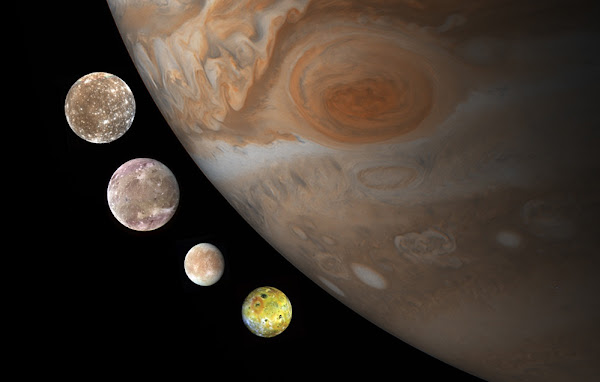
the authors propose that plate tectonics is really driven by the rapid rotation rate of the Earth and the gravitational effects of our very large Moon on the outer rigid lithosphere of the Earth in combination with other orbital characteristics of the Earth, Moon and the Sun. Although I do not entirely agree with all of the aspects of this new explanation of the driving force of plate tectonics, it does provide a plausible explanation for why the rocky planets Mercury, Venus and Mars do not have plate tectonics. After all, of all the numerous planets and moons in our solar system, only the Earth seems to have plate tectonics and also Intelligent carbon-based life. This new explanation for the driving force of plate tectonics also adds support for the Rare Earth Hypothesis that maintains that complex carbon-based Intelligent life might be quite rare in our Universe because it takes more than just having a rocky planet in the habitable zone of a star system to bring forth Intelligent carbon-based life. Rocky planets may also need plate tectonics to keep a rocky planet habitable for the billions of years required to bring forth carbon-based Intelligence and this new explanation for the driving forces of plate tectonics makes the existence of plate tectonics on a rocky planet quite rare. This new explanation for the driving force of plate tectonics requires a rocky planet to have a hot interior, a high rate of spin, a large moon and the large moon must not be too close to the rocky planet or too far away either.

Figure 4 - The Earth's Moon is much larger than the moons of the other planets in our Solar System.

Figure 5 - For example, the Earth's Moon is comparable in size to the size of the four largest moons of the much larger planet Jupiter.

The Earth's Moon is so very large because it formed from the collision of the early Earth with a Mars-sized body called Thea about 4.5 billion years ago. Thea did not hit the early Earth dead center. Instead, Thea collided with the Earth at an angle. This off-center collision produced the Earth's very large Moon and introduced a good deal of angular momentum into the Earth-Moon system. The spin of the Earth greatly increased and the orbiting of the Earth and Moon about a common barycenter also resulted from this off-center collision and the addition of lots of angular momentum to the Earth-Moon system. The large amount of angular momentum of the Earth-Moon system also keeps the Earth's axis of rotation from wandering around a great deal from the tugs on the Earth by the Sun and Jupiter. Our large moon acting on the equatorial bulge of the Earth acts like a gyroscope to keep the Earth's axis of rotation from wandering very far. That is important because having a stable axis of rotation produces stable seasons on the Earth. If the Earth's axis of rotation were to vary greatly, carbon-based life would find it difficult to keep up with the drastic changes to the Earth's seasons that would ensue.

Figure 6 - Thea collided with the early Earth about 4.5 billion years ago and formed our very large Moon and gave the Earth-Moon system lots of angular momentum. The rotation of the Earth increased giving it lots of angular momentum and the orbit of the Moon around the Earth also carried lots of angular momentum.

Because our Moon is so large, the Moon does not really orbit about the Earth. Instead, the Moon and Earth orbit about each other. There is a common point between the center of the Earth and the center of the Moon called the barycenter about which each body orbits the other.

Figure 7 - Because the Earth is more massive than the Moon, the barycenter of the Earth-Moon system actually lies within the body of the Earth about 1700 km below the surface of the Earth. The important point is that the barycenter is not at the center of the Earth. Because the barycenter of the Earth-Moon system is not at the center of the Earth, the barycenter is constantly moving through the planet as the Earth spins and the Moon travels in its monthly orbit about the barycenter. In the above diagram, the red diamond is the barycenter of the Earth-Moon system. Notice that the Earth and the Moon both orbit the barycenter of the system. Notice that the rapid daily spin of the Earth causes the barycenter to constantly move through the body of the Earth.

When a planet orbits the Sun the gravitational force from the Sun pulling on the planet is matched by the centrifugal force pulling the planet away from the Sun. The same goes for the Earth and Moon orbiting the barycenter. At the barycenter, the gravitational pull of the Moon is exactly matched by the centrifugal force of the Earth orbiting the barycenter. However, this is only true at the exact location of the barycenter inside the Earth. At any other point within the Earth or at any point on the Earth's surface, the gravitational pull of the Moon will not be balanced by the centrifugal force produced by the Earth orbiting the barycenter. This unbalance of forces causes the Earth's tides and produces stresses within the body of the Earth at any location other than the barycenter. And because the Earth turns on its axis every day and the Moon and Earth take a month to orbit the barycenter, the barycenter location inside of the Earth is constantly changing and so are the produced stresses. This produces tidal forces on the Earth's oceans and also on the Earth itself. Between the barycenter and the Moon, the gravitational pull of the Moon exceeds the centrifugal force produced by the Earth orbiting the barycenter so there is a net force pulling towards the Moon. On the opposite side of the Earth, the centrifugal force is greater than the gravitational pull of the Moon so there is a net force away from the Moon. This causes the Earth's oceans to bulge towards the Moon on the side of the Earth facing the Moon and to bulge away from the Moon on the side of the Earth facing away from the Moon. But this also causes the outer cold and rigid lithosphere of the Earth to have similar bulges. We do not notice these bulges of the Earth beneath our feet that pass by every 12 hours because the bulge is only about 0.5 meters high.

Figure 8 - Because the Earth spins on its axis at a relatively high rate of once per day, the 0.5-meter bulge in the Earth gets rotated away from the Moon faster than the bulge can settle back down. The gravitational force of the Moon constantly pulls on the fleeing bulge and that slows down the spin of the Earth. The fleeing bulge also pulls the Moon forward in its orbit causing the Moon to spiral outward. This transfers an equal amount of angular momentum from the Earth to the Moon so that the angular momentum of the Earth-Moon system is conserved. This causes a day on the Earth to increase about 2.3 milliseconds each century and the distance between the Earth and Moon to increase about 3.8 centimeters each year.

But the drag on the Earth's spin is not the same throughout the entire body of the Earth. There is a slight differential drag between the outer cold and brittle lithosphere of the Earth and the more plastic mantle below. This causes a net drag of the entire lithosphere of 2 - 16 centimeters per year in a westward direction counter to the eastward spin of the Earth. Now such a differential drag of the entire lithosphere in a westward direction is of the same magnitude as the relative motions of the Earth's tectonic plates and should therefore be considered as a likely suspect for the driving force of plate tectonics.

Figure 9 - Above we see the absolute motions of the Earth's plates indicated by red arrows. The direction of the red arrows indicates the direction of absolute motion and the length of the red arrows corresponds to the velocity of the plates. Notice that the longest red arrows are mostly pointing to the west in the opposite direction of the Earth's spin. This is the direction that the Earth's large Moon is dragging the surface of the Earth and causing the Earth's spin to slow down.

The authors of the paper cited above contend that plate tectonics on the Earth resulted from the periodic and varying motions of the barycenter within the body of the Earth and the differential stresses produced within the Earth as the barycenter moved around. The plastic mantle of the Earth easily handled these varying stress fields but the outer cold and rigid lithosphere could not. The periodic changes of the stress fields caused the solid lithosphere to fracture into plates and the differential drag of the Moon caused the plates to slowly move over the mantle. This did not happen in a totally uniform manner. Some plates drifted to the west faster than others. For example, the two largest plates on the Earth, the Pacific Plate and the North American Plate are both rapidly moving to the west. The resulting plate collisions between the swift-moving and the slow-moving plates were accommodated by the denser plates subducting beneath the less-dense plates. Thus, plate fractures became spreading centers where the upper mantle formed basaltic melt because the pressure from overlying rock was reduced on the hot mantle material below and allowed it to melt and rise to the surface. The gravitational pull of the Moon then dragged the plates over the underlying mantle and caused the plates to subduct at active margins. The water-rich subducting plates then formed melts that rose to the surface to form magma chambers and volcanoes. In this view, the internal heat of the Earth produces a hot plastic mantle that allows for the differential drag of the lithosphere over the mantle and also provides for the production of rising melts at spreading centers and for volcanic melts from the descending plates at subduction zones. In this view, plate tectonics is not produced by convection currents in the mantle or by the pull of descending plates at subduction zones. Rocky planets need a very large moon to initiate and maintain plate tectonics.

However, the authors in the paper cited above do not share the assertion that angular momentum is simply being transferred from the Earth to the Moon. The authors point out that the Sun-Earth-Moon system is an example of the infamous 3-body problem in physics that does not have a simple analytical solution, especially for three bodies with extended dimensions that are not simple point masses. The authors contend that the 3.8-centimeter increase of the distance between the Earth and the Moon on a yearly basis and the 2.3-millisecond extension of the earthly day each century result from a complex 3-body interaction between the Sun, Earth and Moon. In this view, the differential drag of the lithosphere over the mantle remains a problem yet to be solved. The key point to keep in mind is that the paper cited above proposes that the driving force of plate tectonics is caused by the orbital dynamical forces of gravity and centrifugal forces in a complex manner. The driving force of plate tectonics is fundamentally due to Newtonian mechanics and Newtonian gravity and not the result of the thermal convection currents of a heat engine.

Currently, there is a great deal of controversy over when plate tectonics first began on the Earth. It is known that plate tectonics produces certain geological formations and structures. But these formations and structures are not found in the very deep past so most geologists think that plate tectonics first began later in the Earth's history, perhaps about 3 billion years ago. The question then becomes why did plate tectonics not begin earlier? The authors of this new hypothesis believe that plate tectonics was delayed because, when the Earth-Moon system was first created by the collision of Thea and the Earth 4.5 billion years ago, the Moon was much closer to the Earth. Because the Moon was much closer to the Earth, the barycenter of the Earth-Moon system was nearly at the center of the Earth. A centralized barycenter would therefore produce an unchanging and uniform stress field within the Earth because a barycenter very close to the center of the Earth would essentially eliminate the centrifugal forces of the Earth orbiting the barycenter. An unchanging and uniform stress field would not produce cracks in the rigid lithosphere. But over 1.5 billion years, angular momentum would be slowly transferred from the rapid rotation of the Earth to the orbit of the Moon as it is today. The spin of the Earth slowed down and the distance to the Moon slowly increased. As the Moon receeded from the Earth, the barycenter moved away from the center of the Earth. About 3 billion years ago, the barycenter had moved far enough away from the center of the Earth to produce a varying and nonuniform stress field with enough strength to fracture the rigid lithosphere of the Earth and initiate plate tectonics. In the distant future, the interior of the Earth will have cooled and the Moon will be much further from the Earth. Eventually, plate tectonics will then cease.

Most astrobiologists now recognize that plate tectonics on a rocky planet or moon is a requirement to bring forth Intelligent complex carbon-based life. Rocky planets need plate tectonics to regulate the carbon cycle for billions of years while complex carbon-based life evolves to become intelligent. Perhaps a rocky planet with a hot interior that has a high rate of spin and a very large moon that is not too close or too far away with resulting plate tectonic activity is the ultimate factor in the Rare Earth Hypothesis presented in the classic Rare Earth (2000) by Peter Ward and Donald Brownlee.

Comments are welcome at scj333@sbcglobal.net

To see all posts on softwarephysics in reverse order go to:
https://softwarephysics.blogspot.com/

Regards,
Steve Johnston

Thursday, January 06, 2022

Why Does Social Media Software Make People so Mean and Nasty?

It Doesn't. People have always been mean and nasty.

All of human history can certainly attest to that. Social media software just brings that fact to light. But it seems that in recent years, we have all collectively come to the profound conclusion that most of the meanness and nastiness in the real world of human affairs stems from the social media software that now surrounds us all. We can now all simply blame the mindless software algorithms for all of our woes and thus divorce ourselves from all personal responsibility. The algorithms made me do it. But is that really fair? As I pointed out in The QAnon Phenomenon - Why Does Social Media Software Make People So Nutty? we are all by nature a little bit nutty. Most likely, we are also all by nature a little bit mean and nasty. So why blame software for all of the meanness and nastiness in the world? Certainly, our ancestors of years long gone by did not have the luxury of blaming it all on software.

Many are now very worried about the negative effects of social media software on our young. Being born in 1951, I went to middle school and high school during the 1960s without the benefit of any software at all. I did not have the advantages of having the entire world and most of our Universe at my very fingertips. But still, I did have lots of very nasty bullies and social snobs to deal with. The world has never been for want of bullies and social snobs because we always have managed to keep making more of them. The only difference was that back in the good old days of the 1950s and 1960s, there was no social media software to record it. Today, social media software records all of the very nasty thoughts of the racists, bullies and social snobs that in the past were well hidden. All of that meanness and nastiness were safely buried so that we could all go on living happily in a highly-censored Disney-like world. In fact, bringing forth nastiness was highly frowned upon in the 1950s and early 1960s. Polite people simply did not disturb societal tranquility with such things. That is one of the reasons why the racism, segregation, homophobia, misogyny and other social ills of the 1950s and early 1960s were able to safely hide in the background. Part of that stemmed from the 1950s' attitude that one should not "snitch" on wrongdoing by others.

For example, when I was a freshman in high school back in 1965, I rode to school on a school bus with my best friend. Now on that same bus, a mentally challenged freshman rode along with us. There were some pretty mean and nasty names for people like that back then. We also had a senior bully on the bus who tormented us all, but especially that mentally challenged freshman. I am ashamed to admit that we all just ignored what was going on between that senior bully and the mentally challenged freshman for many weeks. But finally, my friend and I decided that something had to be done, so one morning we built up enough courage to pay a visit to the dean's office to "squeal" on the bully. This was breaking the social norms of the day because both students and faculty were supposed to just ignore bullying as a normal part of growing up. However, the bully was kicked off the bus to the relief of all, and nobody ever found out why. So that was how things were before social media software came about. All of the nastiness of life was still there but was well hidden from all. The value of social media software is that all of the nastiness of racists, bullies and social snobs is now out in the open for all to see and take action. Censoring the nastiness just hides it away.

Comments are welcome at scj333@sbcglobal.net

To see all posts on softwarephysics in reverse order go to:
https://softwarephysics.blogspot.com/

Regards,
Steve Johnston